
Top Counseling Games to Enhance Therapy Sessions


When it comes to therapy, especially with children, keeping things fun and interactive can make a huge difference. I’ve found that incorporating engaging therapy activities into sessions not only helps kids open up but also makes the whole process feel less intimidating. One of the best ways to do this? Games! Yes, games can be powerful tools in therapy. They create a safe space for expression, learning, and growth. Today, I’m excited to share some of my favorite counseling games that can truly enhance your therapy sessions.

Why Use Engaging Therapy Activities in Sessions?
Therapy can sometimes feel like a serious, heavy experience, especially for kids. But when you add engaging therapy activities, you lighten the mood and invite participation. These activities:
Encourage communication in a natural way
Help children express feelings they might not have words for
Build trust between the therapist and child
Teach coping skills through play
Make therapy feel like a positive experience
For example, a simple game that involves storytelling or role-playing can reveal a child’s inner thoughts and emotions without direct questioning. This approach is especially helpful for kids who are shy or resistant to traditional talk therapy.
Top Engaging Therapy Activities to Try Today
Let’s dive into some practical, easy-to-implement games that you can use right away. These activities are designed to be flexible and adaptable for different ages and therapy goals.

1. Feelings Candy Land
This classic game gets a therapeutic twist by focusing on emotions. Print our FREE Feelings Candy Land PDF, which shows which emotion to talk about for each color the player lands on. Don't have Candy Land or need a virtual version? Get our free Feelings Candy World game.
Why it works: It helps kids recognize and label emotions, which is a key step in emotional regulation.

2. Kerplunk
Kerplunk is a fun, easy, and versatile game. You can pick it up at Five Below for about $6, for a smaller version. I like a few things about this game. It makes the problem clear: for example, angry kids get frustrated, anxious kids fret, and impulsive kids make blunders. This allows for coping skill interventions to be used to work through these issuses. It also allows kids to find success at managing these symptoms during play.
Another thing I like is the colors. You can add prompts so that kids will answer questions each time they pull a certain color of stick. This can help you customize your prompts for the session.
Why it works: Kids will get triggered, but you can help them work through it in session. It will allow them to gain success over their emotions in a safe, fun setting.

3. Angry Birds
Angry Birds is one of my favorite games for helping children overcome negative thinking! The pigs represent negative self-talk and the angry birds represent truth bombs. Learn all the ins and outs of this game here. You can play by using the Angry Birds Knock on Wood game, the online Angry Birds games for telehealth, or get my FREE Angry Birds Truth Bomb card game.
Why it works: It helps children recognize their self-talk and how to rescript it in a meaningful way. The imagery of the Angry Birds provides a concrete example of abstract things in their mind.
Related Post: Five Below Play Therapy Finds

How to Choose the Right Games for Your Sessions
Not every game fits every child or situation. Here’s how I decide which engaging therapy activities to bring into a session:
Consider the child’s age and developmental level. Younger kids need simpler, more visual games.
Think about the therapy goals. Are you focusing on anxiety, anger, social skills, or something else?
Observe the child’s interests. Games related to their hobbies or favorite themes increase engagement.
Be flexible. Sometimes a game might need tweaking mid-session to keep the child interested.
Remember, the goal is to create a supportive environment where the child feels safe to explore and express themselves.
Incorporating Counseling Games into Cognitive Behavioral Therapy (CBT)
One of the most effective therapy approaches for children is CBT, which focuses on changing negative thought patterns and behaviors. Integrating counseling games into CBT sessions can make these concepts easier to grasp and practice.
For example, a game that involves identifying “cognitive distortions” or practicing positive self-talk can be both educational and fun. Using games to role-play scenarios helps children rehearse new skills in a low-pressure setting.
Pathways to Peace Counseling offers a fantastic range of CBT-based games designed specifically for kids dealing with anxiety, anger, and depression. These resources are affordable and accessible, making it easier for therapists and parents to support children’s mental health through play.
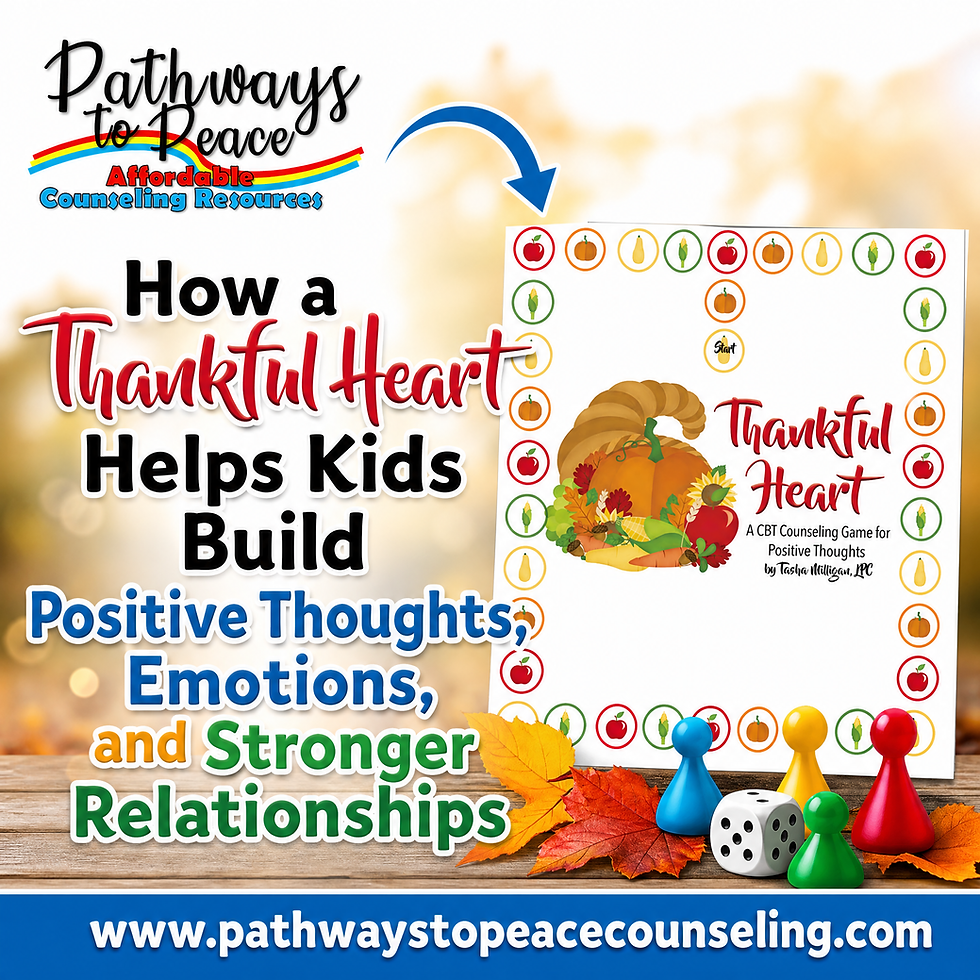
Here are some of our favorite CBT games to help children overcome negative thought patterns:


Tips for Making Therapy Games More Effective
To get the most out of your therapy games, keep these tips in mind:
Set clear goals. Know what you want the child to learn or express through the game.
Debrief after playing. Talk about what happened during the game and how it relates to real life.
Be patient. Some kids may take time to warm up to games, especially if they’re not used to therapy.
Encourage creativity. Let the child modify rules or invent new ways to play.
Use games as a bridge. Sometimes a game can open the door to deeper conversations.
By combining structure with flexibility, you create a dynamic and supportive therapy experience.
Ready to Level Up Your Therapy Sessions?
Using engaging therapy activities like these games can transform your sessions. They make therapy more approachable, enjoyable, and effective for children. Plus, they give you creative tools to address complex emotions and behaviors in a playful way.
If you’re interested in exploring more about how to use counseling games in your practice or at home, check out the resources at Pathways to Peace Counseling. They offer a wealth of tools designed to support kids through CBT and other therapeutic approaches.
I’d love to hear about your favorite therapy games or any success stories you’ve had using play in sessions. Feel free to share your thoughts or questions below!
Let’s keep making therapy a place where kids feel safe, understood, and empowered to grow.
Drop a comment! What are your favorite therapy games? What game needs do you have? Be sure to pick up my free list of games to use in counseling below. It has almost 200 slides, full of games under $20. They are categorized by presenting problem.

Comments