
How a Thankful Heart Helps Kids Build Positive Thoughts, Emotions, and Stronger Relationships

Kids can get stuck in negative loops, just like adults. One hard spelling test, one argument with a sibling, or one missed invitation can become the thing they replay all afternoon. Negative thoughts can be hard to shake off.
A thankful attitude does not erase those hard moments, but gives children another place to look. It helps them notice what's still good: the friend who shared, the parent who listened, the warm meal, the funny joke, the skill they are slowly learning.
That shift matters. When kids practice noticing what is going well, they begin to build healthier thought patterns, more positive emotions, and stronger responses in relationships. Gratitude becomes more than a polite “thank you.” It becomes a way of seeing.
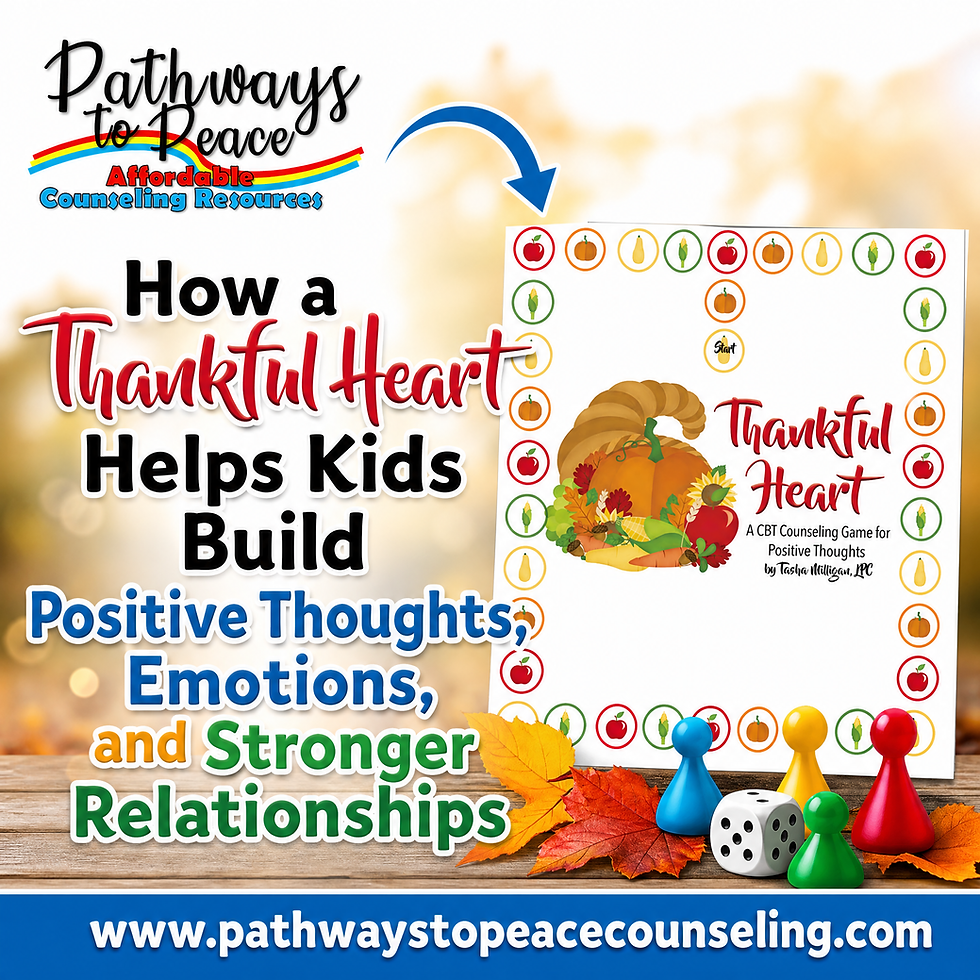
The Thankful Heart game can support that habit in a simple, playful way. Instead of asking kids to sit still for a long lecture about gratitude, it invites them to name real blessings, hear what others value, and practice looking for the good in daily life.

Gratitude helps kids notice more than the problem
Children often feel big emotions before they can name them. A small disappointment may feel huge because their attention locks onto what went wrong.
That is normal. A child’s brain is still learning how to pause, reflect, and choose a response. Gratitude practice gives kids a concrete tool for that pause.
A thankful attitude helps a child ask:
What is still good right now?
Who helped me today?
What is one thing I enjoyed?
What is something I have that I sometimes forget to appreciate?
What went better than I expected?
These questions do not deny the hard thing. They widen the picture.
For example, a child might come home upset because they did not get picked first for a game at recess. Without support, that thought can turn into, “Nobody likes me.” A gratitude prompt can gently help the child remember, “I played with Avery after lunch,” or “My teacher smiled at my drawing,” or “I had fun on the swings.”
The problem is still real. But it is no longer the whole story.
That wider view is powerful. It teaches kids that one negative moment does not have to define the entire day.
Related Post: How is CBT Used with Children?

Thankful thoughts can become healthier thought patterns
Thought patterns are the mental paths kids walk over and over. The more often they think a certain way, the easier it becomes to return to that path.
If a child often thinks, “Nothing good ever happens to me,” that thought can become familiar. If a child practices thinking, “Some parts of today were hard, and some parts were good,” that pattern can become familiar too.
Gratitude helps children build balanced thinking.
Balanced thinking sounds like:
“I was nervous, but I tried.”
“I made a mistake, and I can fix it.”
“My friend was busy today, but that does not mean they stopped liking me.”
“I had a hard morning, but I still have good things in my life.”
This is different from forced positivity. Kids should not feel pressured to smile through sadness or pretend everything is fine. Healthy gratitude gives them room for both truth and hope.
A thankful child can say, “I feel disappointed,” and also say, “I am glad Mom helped me practice.” Both can be true.
That kind of thinking builds emotional flexibility. It helps kids move away from all-or-nothing thoughts, such as “I always mess up,” or “This day is ruined.” Over time, they learn to look for evidence of good, support, progress, and care.
The Thankful Heart game gives children repeated chances to practice this skill in a way that feels natural. Each prompt becomes a small mental exercise. The child is not just answering a question. They are training their attention.

Positive emotions grow when kids learn where to look
Children do not need a perfect life to experience joy, peace, or confidence. They need help noticing the moments that create those feelings.
Gratitude often brings positive emotions to the surface because it points attention toward connection, safety, kindness, and progress.
A child might feel:
Happy when remembering a favorite part of the day
Calm when thinking about someone who cares for them
Proud when naming something they worked hard on
Loved when noticing how someone helped them
Hopeful when seeing that hard days still include good moments
These emotions do not replace sadness, anger, or frustration. They sit beside them. That matters because children need a full emotional life, not just a cheerful face.
When kids play a gratitude game, they often begin with simple answers:
“I’m thankful for pizza.”
“I’m thankful for my dog.”
“I’m thankful for my toys.”
Those answers are wonderful. They are also a starting point. With gentle practice, children can move toward deeper awareness:
“I’m thankful my brother helped me clean up.”
“I’m thankful I didn’t give up on my math page.”
“I’m thankful Grandma called me.”
“I’m thankful I got another chance.”
This growth helps children connect gratitude with real emotional experiences. They begin to learn that thankfulness is not only about things they own. It is also about people, effort, comfort, forgiveness, learning, and love.

Gratitude makes relationships more responsive
A thankful attitude can change how children respond to other people.
When kids notice kindness, they are more likely to return it. When they recognize help, they are more likely to appreciate it. When they pause to think about what someone else did for them, they begin to see relationships as two-way connections.
Responsiveness in relationships means a child can notice another person and respond with care. That may look like:
Saying thank you without being reminded every time
Helping a sibling who helped them earlier
Apologizing after realizing their words hurt someone
Listening when a friend is sad
Showing affection to a parent, grandparent, teacher, or caregiver
Recognizing that others have feelings and needs too
Gratitude supports this because it turns a child’s attention outward.
A child who thinks, “Dad made my lunch even though he was busy,” begins to see effort. A child who thinks, “My sister let me choose the show yesterday,” begins to notice generosity. A child who thinks, “My teacher helped me when I was confused,” begins to understand care.
Those moments can soften frustration. They can also help children respond rather than react.
For example, a child may feel annoyed when a sibling wants a turn with a toy. A gratitude habit does not magically remove the annoyance. But it may help the child remember, “My sibling played my game with me yesterday.” That memory can make sharing feel less like losing and more like caring.
That is a meaningful relationship skill.

The Thankful Heart game makes gratitude concrete
Many children learn best through play. A game gives gratitude structure without making it feel heavy.
The Thankful Heart game can help kids slow down and name what is good in their lives. It gives them a repeatable rhythm for practicing thankfulness with family, classmates, church groups, or small groups of friends.
A simple gratitude game works well because it is:
Concrete
Children can see the card or prompt in front of them. This makes an abstract idea easier to understand.
Interactive
Kids hear other people’s answers. That helps them discover new things to appreciate.
Low pressure
There is no need for a perfect answer. A child can start small and grow over time.
Repeatable
The more often kids practice, the more natural thankful thinking becomes.
Relational
The game creates space for listening, smiling, remembering, and responding to one another.
The goal is not to produce impressive answers. The goal is to help children practice noticing.
A child who says, “I’m thankful for my blanket,” is practicing. A child who says, “I’m thankful my friend forgave me,” is practicing. A child who says, “I don’t know,” may still be listening and learning from others.
Gratitude grows with patience.
Ways to use the Thankful Heart game with kids
Use it at the dinner table
Ask each person to draw or choose a card and share one thing from the day that made them feel thankful.
Keep the pace relaxed. If a child copies someone else’s answer, that is okay. They are learning the language of gratitude.
Use it after a hard day
When a child is discouraged, wait until the strongest emotion has settled. Gratitude should not be used to shut down tears or frustration.
After listening first, invite a gentle prompt:
“What is one thing that helped you today?”
“Who was kind to you?”
“What is one thing you are glad did not go wrong?”
This helps the child find a small light without feeling dismissed.
Use it before bedtime
Bedtime can be a natural time to reflect. A thankful heart prompt can help kids end the day with calmer thoughts.
Try asking for three simple things:
One person they are thankful for
One moment they enjoyed
One thing they are looking forward to
This can shift the mind away from worry and toward safety, care, and hope.
Use it in classrooms or groups
In a group setting, the game can help children practice listening. They learn that different people feel thankful for different things.
One child may be thankful for a pet. Another may be thankful for a quiet place to read. Another may be thankful for a friend who sat with them.
These answers build empathy. They help kids see beyond their own experience.
Use it during family conflict repair
After an argument, gratitude can support reconnection. It should not replace apology or responsibility. But after repair begins, it can remind children of the relationship’s value.
For example:
“Name one thing you appreciate about your brother.”
“Name one time your sister helped you.”
“What is something kind you can do next?”
This teaches kids that conflict does not have to erase love.
Related Post: Tend the Garden of Your Heart CBT Game

Gratitude should feel honest, not forced
A thankful attitude is strongest when it is honest.
Children should not hear, “You should be thankful, other people have it worse,” as a response to pain. That can create guilt and make kids hide their feelings.
Better language sounds like:
“I know that felt disappointing. Can we also look for one good thing from today?”
“It makes sense that you feel sad. Who helped you while you were feeling that way?”
“That was hard. I wonder what gave you comfort afterward.”
This approach teaches kids that gratitude can live alongside real emotions. They do not have to choose between being honest and being thankful.
Adults can model this too:
“I felt frustrated when our plans changed, but I’m thankful we still had time together.”
“I had a tiring day, and I’m thankful for this quiet dinner.”
“I made a mistake, and I’m thankful I get another chance tomorrow.”
Kids learn a lot from hearing adults practice balanced, thankful thinking out loud.
Small thankful moments add up
The power of gratitude comes from repetition. One thankful thought may lift a child’s mood for a moment. A habit of thankful thinking can shape how a child sees life.
Over time, kids may become quicker to notice help, beauty, kindness, progress, and love. They may become more able to pause before reacting. They may find it easier to name positive emotions because they have practiced looking for them.
The Thankful Heart game gives kids a warm and practical way to build that habit. It turns gratitude into something they can see, say, hear, and share.
A thankful heart does not mean a child never feels upset. It means they are learning to look at life with a fuller view. The hard parts are real, but they are not the only parts.
When children learn to notice what is going well, they gain more than good manners. They gain a way to think with hope, feel with awareness, and respond to others with greater care.


Comments